- New-Used Vacuum Tube Testers Parts
- sku: 435939723781713
- SIMPSON 330-RC
330-RC SIMPSON Vacuum Tube Tester Clean
| Brand | SIMPSON |
|---|---|
| Manufacturer Part Number | 330-RC |
| Part Type | VACUUM TESTER TUBE WORK |
| Country/region Of Manufacture | UNITED STATES |
Review SIMPSON Vacuum Tube Tester Very Clean Works
The Simpson 330-RC Vacuum Tube Tester is a versatile and essential tool for any electronics workshop or lab. This vacuum tube tester is designed to provide accurate and reliable testing of various vacuum tubes, ensuring their optimal performance and longevity.
The 330-RC tester features an intuitive and user-friendly interface with a large, backlit LCD display that shows clear and concise test results. It can test a wide range of vacuum tubes, including triodes, tetrodes, pentodes, and beam power tubes, making it an indispensable tool for electronics technicians, hobbyists, and audio engineers.
The tester is equipped with a built-in microprocessor that controls and automates the testing process, ensuring precise and consistent results. It can test various tube parameters, such as plate voltage, grid voltage, plate current, grid current, and output power, providing a comprehensive analysis of each tube's condition.
The 330-RC tester also includes a built-in self-test function that checks the tester's internal circuits and calibration, ensuring its accuracy and reliability. It comes with a flexible test lead set that can accommodate various tube pin configurations, allowing for easy and versatile testing.
The vacuum tube tester is designed with a rugged and durable construction, featuring a heavy-duty steel case and large rubberized feet that provide stability and protection against accidents or impacts. It is also equipped with a built-in cooling fan that ensures the tester stays cool during extended testing sessions, preventing overheating and maintaining optimal performance.
The Simpson 330-RC Vacuum Tube Tester is a must-have tool for anyone working with vacuum tubes, providing accurate and reliable testing results with ease and convenience. Its robust construction, versatile testing capabilities, and user-friendly interface make it an essential addition to any electronics workshop or lab.
Pros and Cons of Buying a Simpson 330-RC Vacuum Tube Tester
The Simpson 330-RC is a well-known vacuum tube tester that has been widely used for testing and diagnosing vacuum tubes. Like any other equipment, it has its advantages and disadvantages. In this analysis, we will discuss both the pros and cons of buying a Simpson 330-RC vacuum tube tester.
Pros:1. High Accuracy: The Simpson 330-RC tester is known for its high accuracy in testing vacuum tubes. It can measure various parameters such as plate voltage, grid voltage, anode current, and plate resistance, with a high degree of precision.
2. Durable Construction: The tester is built with a robust and durable design, making it suitable for heavy use in industrial settings. It has a metal casing that protects the internal components from damage.
3. Wide Testing Range: The Simpson 330-RC can test a wide range of vacuum tubes, from small signal tubes to large power tubes. It can handle tubes with ratings up to 2000 watts and 10,000 volts.
4. Easy to Use: The tester has a user-friendly interface, making it simple for even beginners to use. It also comes with a comprehensive user manual and a set of test leads to make the testing process easier.
5. Versatile: The Simpson 330-RC can be used for various applications, including testing vacuum tubes in audio equipment, radio transmitters, and power amplifiers.
Cons:1. Expensive: The Simpson 330-RC is a high-end vacuum tube tester and comes with a hefty price tag. It may not be affordable for those on a tight budget.
2. Large and Heavy: The tester is quite large and heavy, making it less portable than some other options. This can make it difficult to move around, especially in small workspaces.
3. Complex: Although the tester is easy to use, it can be quite complex for those who are not familiar with vacuum tube testing. It requires a good understanding of vacuum tube theory and operation to get the most out of it.
4. Limited Testing Functions: While the Simpson 330-RC can test a wide range of vacuum tubes, it may not be able to test all the parameters of some tubes. For example, it may not be able to test the microphone grid leakage current in certain tubes.
Conclusion:The Simpson 330-RC vacuum tube tester is a high-quality piece of equipment that offers accurate and reliable testing of vacuum tubes. It is durable, versatile, and easy to use, making it a popular choice for professionals in various industries. However, it comes with a high price tag and is quite large and heavy, making it less portable than some other options. Ultimately, the decision to buy a Simpson 330-RC vacuum tube tester depends on your specific needs, budget, and workspace constraints. If you require accurate and reliable vacuum tube testing and have the budget for it, then the Simpson 330-RC is an excellent choice. However, if you are on a tight budget or require a more portable solution, there are other options available in the market.
Recommendation:If you are in the market for a vacuum tube tester and are considering the Simpson 330-RC, I would recommend doing your research and comparing it to other options in the market. Consider your specific testing requirements, budget, and workspace constraints before making a decision. If you require high accuracy, durability, and versatility, and have the budget for it, then the Simpson 330-RC is an excellent choice. However, if you are on a tight budget or require a more portable solution, consider other options such as the Fluke 2818 or the B&K Precision 3590A.
Details:
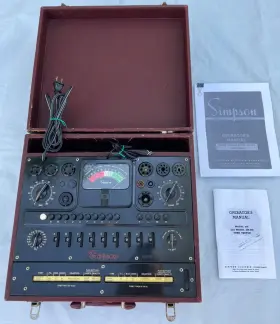
I have used this tester over the past 15 years to check a variety of tubes, most recently several 12ax7 and 5157 tubes see photos. Simpson 330-RC tube tester with intact and functional built-in roll chart. This is an easy to use, classic, and good looking tube tester.you don't often see a vintage tester that looks this. This functioning tube tester is a classic example of mid-twentieth century craftsmanship and functionality.
The tester is clean and well maintained, but does show typical wear tear of a unit this old the latches are rusty. The power cord has been replaced, and it comes with a duplicated owners manual, second photocopied manual tube tables from 1956.
specifications vactubetest:
- brand: Simpson
- mpn: 330-rc
- part type: Vacuum Tester Tube Work
- country/region of manufacture: United States
general vactubetest:
- category: Business & Industrial > Test, Measurement Inspection > Calibrators > Tube Testers
offer vactubetest:
- started: august 17, 2025
- sold #: 14
- quantity: 1
- best offers: true
- options: ship-to-home
- availability: in stock
shipping vactubetest:
- service: usps ground advantage
- class: standard
- type: calculated
- transit: 4-10 days
- carrier: usps
seller vactubetest:
- # reviews: 10
- rating: 100.0%
- city: alpine, texas
returns vactubetest:
- policy: no returns
payments vactubetest:
- other
- wallet: paypal
- credit card: discover
Similar Items:
- Hickok Signal Corps I-177-b 2469 Tube Tester Simpson Panel Meter I-177-B tube tester Simpson 2469 panel meter, bench tested and appears to be working - see pics, accuracy unknown, sold as found in good used condition, all pictures they constitute part of the ask questions...(February 24th, 2024)
- Simpson N a555 Tube Tester Model 555 In Orig Hard Case Untested But Powers On Simpson tube tester model 555 in orig. Hard case - untested but powers on, condition pre-owned very good item is in very good pre-owned condition with some minor cosmetic damage as seen photos. Please consider photos part of. Included items are seen in photos...(October 5th, 2024)
- Simpson 305-rc Model Tube Tester With Operators Manuals Fully functional and in good condition. We often use a background removal tool so that you get to see all aspects of the actual product. Perfect for electronics enthusiasts and collectors. Ideal for collectors. Includes operators manuals. Vintage Simpson model 305-RC tube tester with original ...(September 8th, 2025)